Author: Violetta

22 Jan 2023
Germano reale

Report from 19 to 21 January 2023

Saturday, January 21 was the date we chose to conduct the International Waterbird Census at La Cassinazza, after a two-year hiatus due to Covid-19. I would like to thank everyone, both experts and enthusiasts, who came to give us a hand. And my compliments go out to them for facing a freezing cold day as if it were a springtime outing. Our most interesting result was our tally of Teal: with just over 1,600 individuals, this was a record count, and reminds us that La Cassinazza is one of the most important wintering sites for this species in all of Lombardy. Mallards, on the other hand, bucked the trend, with about 2,300 individuals, compared to 3,300 during the last IWC in 2020, and the 5,000 or more that we routinely tallied up to five or six years ago. The numbers of scarcer ducks were in line with recent counts: 18 Shovelers, 7 Gadwall and a single Pintail; no Wigeon were seen this year. A single Shelduck put in a brief appearance, just long enough to make the count. About 110 Cormorants and well over 600 Pygmy Cormorants were counted at their evening roost.

The ducks are the stars of the show during the IWC, and in keeping with tradition, the photo of the day is dedicated to them. Once again we have a Mallard, a drake photographed engaging in “comfort behaviour” as it stretches out to relax its muscles.

Germano reale

19 Jan 2023
Capriolo

Report from 11 to 13 January 2023

Our unseasonable spell of warm weather is over, and fortunately the temperatures have dropped, although they are not particularly cold. The effects of the mild temperatures include hazels flowering two weeks ahead of schedule, and much more surprisingly, a few blackthorns in bloom, which must have been tricked by our unusually warm December.

This week finally saw the arrival of Fieldfares, together with sizeable flocks of Siskins. The Chaffinches and Bramblings have now moved to the farm fields, perhaps because they have picked the sunflower crop dry and are now searching for new food sources. These minor developments aside, we are now at that time of year – the middle of January – when bird movements come to a virtual standstill. This is why the International Waterbird Census is held in this period: at La Cassinazza, the count is scheduled for next week.

Roe Deer are an everyday sighting at La Cassinazza, and this photo, which I took two days ago, seems unremarkable at first glance. I chose it because it shows just how green the meadows still are, which is most unusual for the dead of winter.

Capriolo

25 Dec 2022
Passera mattugia

Report from 20 to 24 December 2022

After a brief cold spell, the temperatures quickly rose again. We are at the end of December and there are still many Little Egrets about. Several decades ago, when I first started birdwatching, this was a summer visitor that we never saw in winter. In recent years, however, they are wintering in ever-higher numbers. Indeed, one just has to look at how lush and green the meadows are even now to realize that something has changed. The Lapwings finally arrived in numbers, albeit for one day only, with a flock of five hundred or more. As always, they were very skittish and flushed frequently – they were quite a sight! The Christmas checklist was enhanced by a Pochard and a Great Grey Shrike; while the former is uncommon but by no means a rarity, the latter had not been seen here for almost six years.

The weather was grey and foggy all week, with no chances for photography. In such cases, I pick out a photo from my archives. This week, I have chosen the Tree Sparrow, inspired by having run into a large, noisy flock in the farm fields. Once this would have been an everyday sight; now, it might be a signal that the species is finally recovering after its population had crashed. Hopefully the same will happen with the Italian Sparrows, once a permanent presence around the farmhouses, and now entirely gone from the area.

Merry Christmas from La Cassinazza.

Passera mattugia

19 Dec 2022
Migliarino di palude

Report from 15 to 17 december 2022

Due perhaps to the cold snap, waterfowl numbers at La Cassinazza are once again respectable, if not quite as high as during the best years. There are perhaps three thousand or more Mallards, and well over a thousand Teal. There has also been a mass arrival of Chaffinches over the last few days, with large flocks often encountered: the sunflower crop, with all those unharvested seeds, attracts them in their hundreds. The sunflowers are also pulling in the Ring-necked Parakeets, which have already despoiled all available fruit: after the figs and the Concord grapes I mentioned last week, they have now ransacked the medlars, depriving me of one of my favourite late-fall treats.

Reed Buntings are much in evidence these days, and they are also fond of sunflower seeds. Although outnumbered by the Chaffinches, they are much easier to photograph.

Migliarino di palude

15 Dec 2022
Parrocchetto dal collare

Report from 8 to 11 December 2022

The first few Bramblings and Chaffinches arrived here over a month ago, but it is only now that they have crossed the Alps in good numbers that they have become common in the Po Plain.

The same route must have been used by the Fieldfare, whose absence I was lamenting in the previous report. It is finally here. Yes, you read correctly – just one! This is definitely not a good year for thrushes.

The Shovelers we saw over the last several weeks – up to forty, a good count for here – must have continued their journey. Evidently they did not plan to winter here.

The Starlings that were roosting in the reedbed are also gone, almost as if they could sense the cold snap that is being forecast for the next few days.

The Ring-necked Parakeet is an alien species, whose population here originates from individuals that escaped from captivity. It began by colonizing city parks, then expanded into the countryside, and is now considered an established part of the Italian avifauna. It arrived at La Cassinazza three years ago, initially with a few individuals, but in these early winter days we are seeing as many as twenty or thirty together. They are fond of fruit, and in late summer gorged themselves on figs. Now the unharvested Concord grapes, whose dried and sugar-rich fruits are still on the vine, are an irresistible attraction.

Parrocchetto dal collare

04 Dec 2022
Regolo

Report from 29 November to 2 December 2022

It’s been rainy and foggy. The only clear change in the birdlife was a spike in Mallard numbers, while Teal increased as well. Also of note is the complete lack of thrushes: we saw a handful of Song Thrushes in early November, but they promptly disappeared, and we haven’t had a sniff of either Redwings or Fieldfares. Other species that normally appear by mid-November – Great Bittern, Peregrine Falcon, Marsh Harrier, and Stonechat – are also missing. Perhaps migration is simply very late; we shall see.

The river of Pygmy Cormorants flying into La Cassinazza every night is always a sight to behold.

Goldcrests continue to be much in evidence. Every winter, these tiny, colorful sprites, with their erratic and unpredictable movements, are an irresistible challenge for my photographic skills. This image dates back to last Saturday, during those few hours when the sun finally managed to break through the fog. The yellow maple leaves make for a matching background.

Regolo

26 Nov 2022
foliage

Report from 23 to 26 november 2022

The weather is getting colder, and morning temperatures hover right around freezing. The Goldcrests and Firecrests are still much in evidence, as are large Meadow Pipit flocks in the rice stubble, but the real mass arrival concerned the Reed Buntings.

The only change in duck numbers was in our Shoveler count, which is now around forty.

Last year around this time we enjoyed record numbers of Lapwings, with up to two thousand birds; this year we must settle for one or two hundred, depending on the day, often with a handful of Ruff mixed in.

In the hour before sunset a stream of Pygmy Cormorants heads for their nighttime roost, with most arriving during the last half hour of daylight. They all follow the same flight path. They come from the south – from the Ticino river – in a long, snaking line, which makes them easy to count. The results were surprising: my highest count was of nearly 700 individuals! And a few more must have arrived after it was too dark to see. To think that only ten years ago this species was practically unheard of around these parts; who knows what caused such a population expansion?

Foggy days and sunny days have been alternating this week. When the sun is shining, the fall colours truly come to life.

foliage

21 Nov 2022
Folaga

Report from 16 to 19 November

The reedbed and the small willow stands within it provide shelter from the wind, the cold, and the marauding Sparrowhawks, and many birds use it to roost overnight. In addition to the Starlings – which are largely gone now, save for a few hundred – it hosts a great variety of small songbirds. The reeds are too thick to see through, so we must settle for listening to their calls. Reed Buntings and Chaffinches are the commonest species, followed by the Penduline Tit, Blue Tit, White Wagtail, Long-tailed Tit, Meadow Pipit, Water Pipit, Chiffchaff, Tree Sparrow, Cetti’s Warbler, and even Magpie. Finally, there is the Water Rail, which never leaves the safety of the reeds. The number of Mallards is holding steady, albeit still far lower than in recent years at this season, and the same can be said of Teal and Gadwall numbers. Shovelers are gradually increasing and I counted about 25 or 30, but I was unable to find a single Wigeon, despite spending much time searching for them in their favourite spots; all my efforts only produced a single hen Pintail. Plenty of Goldcrests have come down from the northern forests, and a fair few Firecrests are with them. An early morning walk produced the season’s first Woodcock.

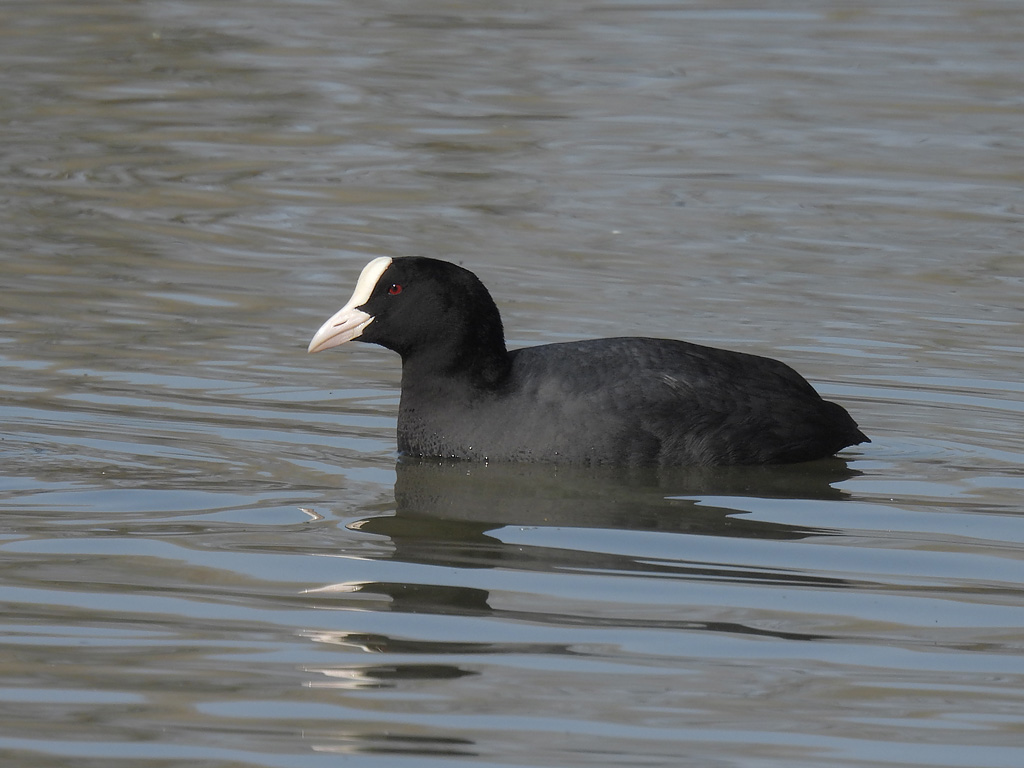
Much like the Cormorant, which featured in the previous report, the Coot is an oft-neglected permanent resident of La Cassinazza. Every once in a while, I like to highlight these species we take for granted.

Folaga

11 Nov 2022
Cormorano

report from 9 to 10 November

The autumn-like weather – mist, fog, and gloom – marred the two days I had this week to be out in the field. Mallard and Teal numbers remained unchanged, but some of the scarcer ducks saw a minor influx, with about fifteen Shovelers, under ten Gadwalls, and a handful of Wigeons.An immature Spoonbill was also a new arrival. Two months after we first saw it, the Nuthatch is still present. We can now safely say that it is here at La Cassinazza to stay, at least for the winter. Hopefully it will also stay on to breed. Goldcrests and Siskins have come down from the Alps in great numbers and flocks of each are common here in the lowlands. The Siskins prefer to stay high in the trees, while the Goldcrest flit through the shrubbery.

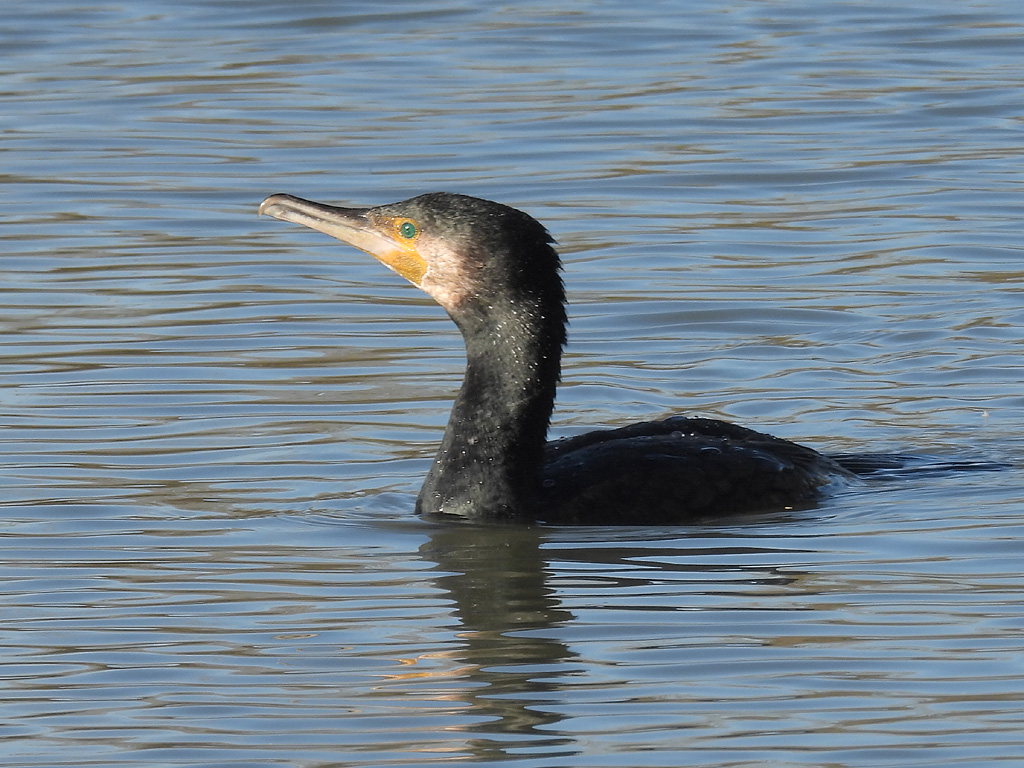
Cormorants are one of those species that are hard to miss at La Cassinazza, and they hit peak numbers – up to a hundred or more – in fall and winter. They spend their days on the main lake, either in the water when they are fishing, or on one of the islands when they are resting. As night falls, they move to a poplar grove to roost.

Cormorano