Author: Violetta

06 Feb 2022
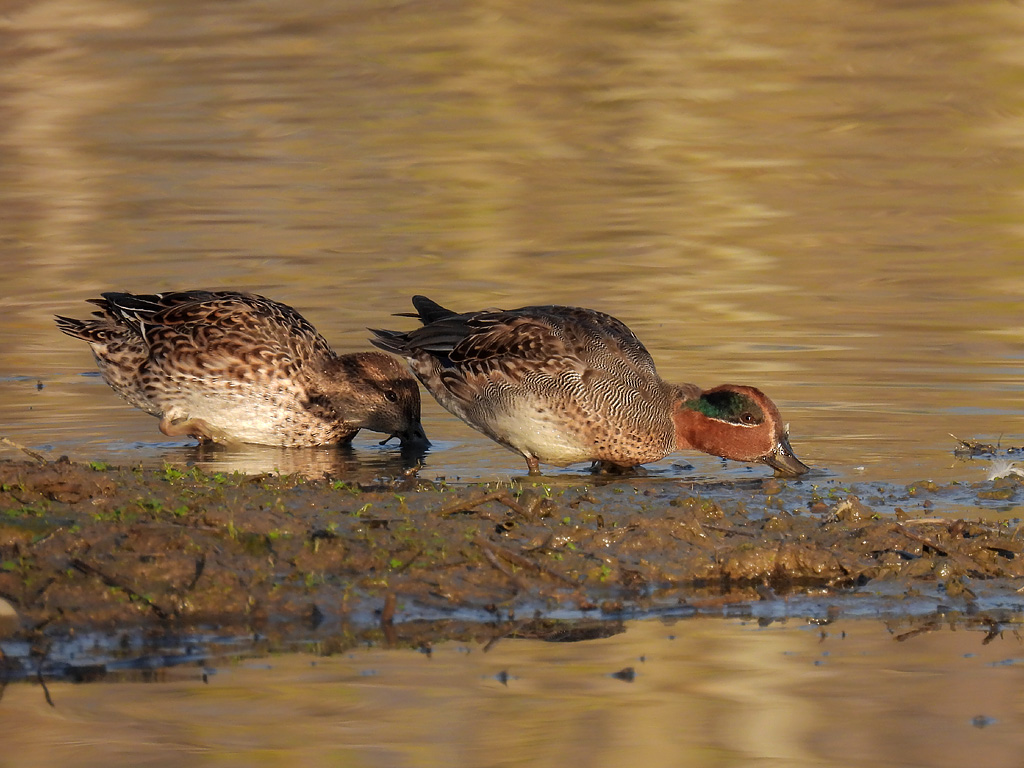
Gallinella d’acqua

Report February 01-05 2022

With a sudden turnaround, the weather gods gave us clear, sunny days – with a few exceptions, of course – culminating in spring-like afternoons, during which the year’s first butterflies took to the wing: the Red Admiral, Peacock, and Brimstone. Great Tits have begun to sing, and Magpies are fixing up last year’s nests. Other birds – especially Blackbirds, Reed Buntings, and Siskins – have suddenly become much more numerous and noisy; perhaps they are already on the move. Still, I will bestow the official title of the year’s first migrants on the seven Ruff that arrived mid-week, beating out a flock of 15 Green Sandpipers by just a couple of days. The handful of Dunlin associating with Lapwings that we have been seeing at La Cassinazza since November wintered locally. During my walks I often run into Great Bitterns. I think there are at least three individuals around, each with its own well-defined territory.

Moorhens are so common that we take them for granted. In winter, large numbers concentrate around the main house and the courtyard, but we still barely acknowledge their presence.

Gallinella d’acqua

30 Jan 2022
Alzavola

Report January 23-30 2022

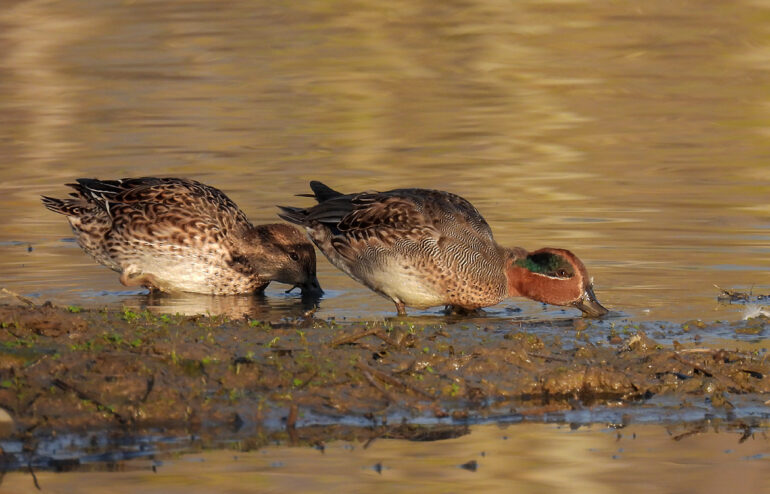
La Cassinazza remained shrouded in fog for much of the week. Under these conditions, birdwatching is reduced to seeing shadows and hearing calls and wingbeats. Late winter is when the number and variety of birds bottoms out, and there is no migration to speak of. On top of all this, the weather was cold and humid. Still, my enthusiasm at finally being outside after two weeks in Covid quarantine was not diminished one bit. But I don’t have much to report.  There were several close encounters with Great Bitterns. Their proverbial wariness, mimetic plumage, and the fog meant that they always saw me before I saw them, flushing when I was only a few meters away. Marsh Harriers are notable for their absence. Until a few years ago, the reedbed at La Cassinazza hosted a winter roost of ten to twenty individuals. The Wild Boars have now taken over the reedbed – and other habitats as well – and the Marsh Harriers are gone. Like every year, the first hazel blossoms signal the beginning of the new cycle of seasons.  Waterfowl numbers remain high. While the Mallards came and went this year, the Teal have remained faithful to La Cassinazza, their numbers fluctuating between 700 and 1000.

Alzavola

22 Jan 2022

Report January 09-22 2022

Being quarantined at home is all the rage these days, and I had to join the club this week.
As such, I cannot write the usual weekly report, and will probably have to skip the next one as well.  The dark days are not over yet, and perhaps this photo of a Kingfisher will help brighten up your week.

Martin pescatore

08 Jan 2022

Report January 01-08 2022

A new birdwatching year is upon us. The first three species of 2022 were Teal, Mallard, and Tree Sparrow, in that order. The Little Owl was  the fourth, and narrowly missed the podium. Of the three woodpecker species that reside at La Cassinazza, the first to be recorded was also the scarcest – the Little Spotted Woodpecker. A large flock of Woodpigeons in the rice stubble contained a single Stock Dove, at least as far as I could tell. The Firecrest has already made it onto the 2022 year list, but oddly its commoner cousin the Goldcrest is still missing, in spite of much searching. There were several Great Bittern sightings.  Three Kings’ Day saw the return of hundreds of Lapwings to La Cassinazza, after they had been absent or nearly so during the month of December.
On the same day, a flock of over 30 Cranes flew above the property, in a perfect V, with their slow and powerful flight.

Gru