Author: Violetta

07 May 2022
Deliephila elpenor S01

Report from 3 to 6 May 2022

In spite of the weather’s attempt to drag us back to winter, spring is advancing and migration is drawing to an end, both for waterbirds – most of which have already passed through – and for songbirds: we had no new arrivals this week. Still, a handful of our regular breeders – Little Bittern, Marsh Warbler, and Reed Warbler – have yet to be seen; perhaps they are late. The air is filled with the songs of Nightingales, Golden Orioles, and Cuckoos. A Hoopoe is singing as well: should it stay on to breed, it will be a first for La Cassinazza.
Our Common Tern colony, small as it may be, is a hive of activity. At least eight pairs have occupied the nesting platforms, and I expect the first eggs any day now.
With the onset of warmer weather, I can finally share photos of wildlife other than birds. Of course, La Cassinazza is a haven for birds, especially waterbirds, but after an endless series of photos dedicated to them, it’s time for a change of scenery.

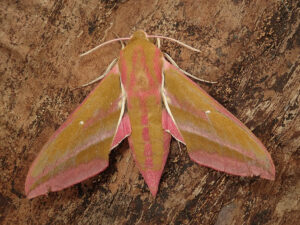
The garish Elephant Hawk Moth Deilephila elpenor is particularly fond of honeysuckle blossoms.
Deliephila elpenor S01

01 May 2022
Upupa

Report from 26 to 30 April

Earlier in the week there were still several hundred waders around, mostly Ruff and Wood Sandpipers. They are drawn to La Cassinazza’s wetlands since none of the surrounding ricefields have yet been flooded due to the drought. A spell of settled weather mid-week, with calm clear nights, meant that most of the Ruff decided to resume their northward journey, and now there are only a few dozen left. A Black-tailed Godwit spent a few hours here one day, and a handful of Spoonbills have been putting in sporadic appearances. Once again we heard the characteristic reeling of a Grasshopper Warbler, but although it was loud, clear, and close, like always it remained impossible to see. The Hoopoe influx continued this week, albeit in much lower numbers. New arrivals for the season included Hobby, Spotted Flycatcher, Turtle Dove, and Bee-eater. The first dragonfly of the year flashed past me before I had a chance to identify it; one day later, I saw the year’s first damselfly, a Common Bluetail(Ischnura elegans).

I’m attaching a photo of a Hoopoe, which was perhaps better suited for last week’s report.

Upupa


08 Apr 2022
Piro piro boschereccio

Report from 4 to 10 April

Every day sees the arrival of a new species for the season: Yellow Wagtail, Willow Warbler, Little Grebe, Black Kite, and Common Tern. Two pairs of the latter have already settled in on the lake and begun their courtship, with the male offering minnows to the female. The first Night Herons appeared two weeks ago, and now the full contingent is here. It is still early for them to nest, and their lives are exclusively noctural. Several dozens of them spend the day dozing at their daytime roost. On the other hand, the many Robins and White Wagtails that spent the winter with us are all gone – we have not seen a single one of either. Butterflies are increasingly conspicuous. In addition to those that overwinter here and can be seen on the wing at any month, all it takes is a warm day for us to see the Brimstone (Gonepteryx rhamni), Eastern Bath White (Pontia edusa), Speckled Wood (Pararge aegeria), Holly Blue (Celastrina argiolus), Small Copper (Lycaena phlaeas), Southern Grizzled Skipper (Pyrgus malvoides), and Mallow Skipper (Carcharodus alceae). Springtime also means new sounds: during the day we can hear the calls of the Italian Tree Frog, while the European Green Toad sings at night. Turning back to birds, the wader flocks have included 150 Ruff and 100 Wood Sandpipers, in addition to several more Greenshanks and Spotted Redshanks, and a single Black-tailed Godwit. Green Sandpiper numbers fell by half in just a few days. Although the Wood Sandpipers are not the most numerous wader species this week, they are surely the most conspicuous. Unlike the Ruff, they are highly vocal, and they are also scattered all over the place and hard to count, again unlike the Ruff, which prefer moving in tight flocks.

Piro piro boschereccio

28 Mar 2022
Fenicottero

Report from 21 to 27 March 2022

Spring is official upon us, although you wouldn’t know it from the morning temperatures. The air warms up quickly though, because the sun is always shining. And I do mean always: we have not had any rain to speak of in three months. The wader migration is becoming quite engrossing: three or four hundred small shorebirds, mostly Ruff, but also including Green Sandpiper, Common Snipe, Lapwing, Little Ringed Plover, Black-winged Stilt, and a handful each of Wood Sandpiper, Spotted Redshank, and Greenshank crowding into one small impoundments are great fun to watch, and become a veritable firework show when a Goshawk or Peregrine is on the hunt. Later in the week, shorebird numbers began to fall. The first Purple Heron of the year has arrived, and so have the Night Herons, although one could be forgiven for failing to notice them: they spend all day motionless in a small willow grove, and are only visible because the leaves aren’t fully out yet. The Spotted Crake and Little Crake are even more elusive, and the fact that we have been able to glimpse them – not once, but several times – suggests that there are quite a few around.
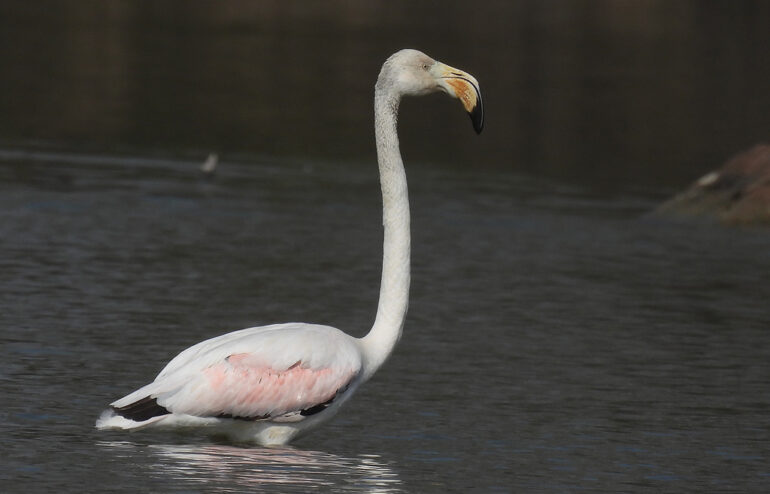
A Flamingo has shown up on the lake, about as unexpected a species as we could imagine. It is a juvenile, and its plumage is not yet pink. It is clearly off course, and was exhausted when it arrived. It found some suitable habitat at La Cassinazza and decided to stop, and as of this writing is still here.

Fenicottero

22 Mar 2022
Pettirosso

Report 14-20 March 2022

With perfect timing, twenty or so Garganey – known as Marzaiola, the “March bird” in Italian – have dropped in at La Cassinazza. Almost all are drakes, the earliest to migrate. Equally on schedule are the Ruff, but in much more spectacular numbers that have grown with each passing day; there are now at least 250. The number of Black-winged Stilts is also steadily growing, and there are now about twenty. Barn Swallows have also arrived, as expected. The lengthy list of waders already present at La Cassinazza grew by one with the arrival of several Wood Sandpipers, somewhat ahead of schedule. The Black Stork, a one-year-old bird, stayed with us at least until mid-week, as did the Black-tailed Godwits. A Little Crake giving quick glimpses rounded out the list of new arrivals.

I’ve always thought of Robins as quintessential winter birds. As territorial and aggressive as they are towards other Robins, they are often quite friendly and approachable when it comes to humans. They are resilient, hardy birds that can withstand even the harshest winters, when many other passerines leave or, worse yet, succumb to the cold.

I can’t close out my winter reports without a photo of a Robin

Pettirosso

22 Mar 2022
Volpe

Report 07-13 March 2022

Winter came back with a vengeance this week: morning temperatures dropped below zero, with ice on the impoundments and frost on the ground. In spite of the cold, the Blackbirds were singing their heads off in the pre-dawn darkness, as they would on a warm spring morning. For several months now, the network of canals that brings water to La Cassinazza has been drained for maintenance work, and it hasn’t rained for weeks. In spite of all our efforts, the water level is dropping in many impoundments, and they are drying up. During migration, this isn’t necessarily a bad thing, as the mudflats are irresistible to waders. In recent days we saw as many as 150 Common Snipe, with about 80 Lapwings, nearly as many Green Sandpipers, about 30 Ruff, and small numbers of Black-winged Stilts, Little Ringed Plovers, Black-tailed Godwits, Common Redshanks, Spotted Redshanks, and a single Greenshank. We weren’t lacking for variety. In addition to the above, we had numerous new arrivals for the year, including Great Crested Grebe, Garganey, Black Stork, Hoopoe, and Spotted Crake, one of which was ridiculously approachable.On a recent icy morning, a Red Fox was hunting in a frosty meadow.

Volpe

06 Mar 2022
Cesena

Report 01-06 March 2022

Spring migration has started. New arrivals at La Cassinazza this week included 50 or so Ruff, about as many Common Snipe, and several dozen Green Sandpipers. Flocks of Cranes flew overhead, as did a baker’s dozen Golden Plovers. There was a clear influx of Fieldfares and Chiffchaffs. Water Pipits also came through, although they blend in so well in the mud and dirt that we often fail to notice them Finches, on the other hand, largely left the area. The numbers of Siskins and Chaffinches have plummeted, and Bramblings are essentially gone. New species for the season were Greenshank, Black-winged Stilt, Stonechat, Goldfinch, Red Kite, Goshawk, and Hen Harrier. The last-named species was once regularly found all winter long, but now they rarely push as far south as the Po Plain. Other interesting sightings this week included Great Bittern, Coal Tit, Little Ringed Plover, Pygmy Cormorant – once a rarity here, but now a constant presence – Peregrine, and Lesser Spotted Woodpeckers in full song. Finally, it is always a thrill to flush a Woodcock.

I have chosen the Fieldfare as my bird of the week. It is undoubtedly the most handsome of our thrushes.

Cesena

01 Mar 2022
Cinciallegra

Report 20-28 February 2022

The White Poplars are in full bloom, a full two weeks earlier that they would have been twenty years ago, when I first began keeping track of such things. This also happened in winter 2006-7, which back then was considered to be extraordinarily mild. Now, these early blooms are increasingly frequent, to the point where we have come to expect it: another sign of the changing times. The Chaffinches, Bramblings, Siskins, and tits are all taking advantage of this bounty and are happily feasting, causing the flowers to literally rain down from the trees. After a few months of silence, the Tawny Owl has resumed singing. In fact, a pair is present, and was duetting. The only new arrival for the week was the Little Ringed Plover.

Great Tits are present all year round, and their numbers remain about the same, whether or not all individuals are actually resident. By and large, however, they migrate very little, unlike their close relative the Blue Tit, which instead becomes more common in winter, sometimes with extraordinary influxes.

Cinciallegra

21 Feb 2022

Report 13-19 February

Over the last week, Siskin numbers have gradually been falling off. Theirs was a veritable migration wave: I was seeing them everywhere, not just in the countryside, but also in city parks, private gardens, and even median strips.  The Starlings are back at La Cassinazza after an absence of several weeks. Every year, in the heart of winter, they leave in search of milder conditions. On top of the church steeple, a pair of White Storks is back on its old nest. The other pairs that breed locally should be back soon. As new birds arrive, others leave: the numbers of Teal and Mallards have begun to drop. Apart from this, there was not much evidence of migration. This week did give us a couple of interesting sightings, though: a Woodcock crouching in a patch of woods and a Golden Plover circling over the wetlands.
Blue Tits are always common here, but their numbers can vary substantially from one winter to the next. This year was nothing special, with a minor influx in the last few weeks, at the same time as the Siskins were passing through.

Cinciarella

12 Feb 2022
Lucherino

Report February 06-12 2022

The willow buds are swelling more and more, a Little Owl is singing from the roof of the main house (all night, every night, alas) and those few Reed Buntings that remain in the reedbed are trying out their songs as they get ready to leave.
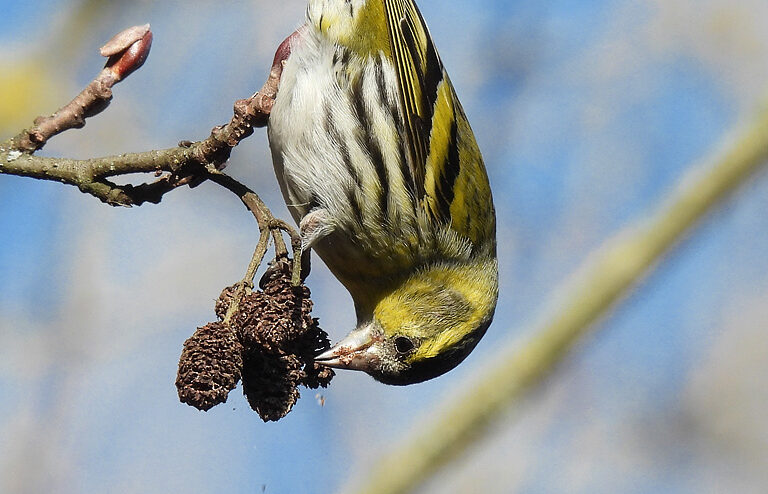
Spring is coming, that much is evident. The main event this week was a very brief appearance by two Ruddy Shelducks. As soon as they saw me appear on the horizon they took off and never came back. I know this species is usually immediately dismissed as an escape, but these two very wary individual cannot possibly be from the Swiss population that feeds on bread from the hands of tourists. We’ll never be sure, but my money is on a wild origin. The Blue Tits have become abundant, but the commonest small passerines this week were the Siskins. Inconspicuous and usually silent, they hang acrobatically from alder branches to get at the catkins and feed on the tiny seeds they contain.


Lucherino