Report from 22 to 25 June 2022
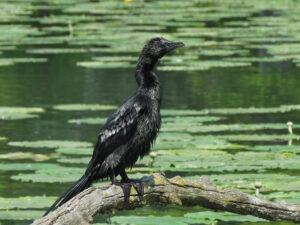
During my absence, the apparently small heronry at La Cassinazza grew in a most spectacular fashion. The first few pairs of Night Herons and Little Egrets that built their nests there attracted many other conspecifics, together with dozens of Cattle Egrets and good numbers of Pygmy Cormorants: now their nests are stacked on top of one another, much like a crowded apartment building. At least one nest of Squacco Heron – the rarest of our colonial herons – is also present. At the same time, the Common Tern eggs have hatched, as have those of our only pair of Little Ringed Plovers: their chicks are immediately autonomous, and while they are no bigger than a walnut, they are already scampering about under the watchful eyes of their parents. There were a few unexpected visitors as well. The most significant were three Ferruginous Ducks, a species we had not seen here for a good fifteen years. That same day we saw an Egyptian Goose, which we cannot consider truly wild, as its native range is south of the Sahara and it is common in captivity.
A dozen Green Sandpipers and a handful of Teal herald the start of post-breeding migration. Much less welcome was the appearance of the dreaded Japanese Beetle (Popilla japonica), an invasive alien pest that causes extensive damage to plants by skeletonizing their leaves.
The Pygmy Cormorant is undergoing a major range expansion. Although it only appeared at La Cassinazza in recent years, it has now started to breed. Welcome!